
Professional marine surveying is about understanding the vessel as a whole—from structural condition and machinery to the systems people rely on every day. Here is what owners, buyers, and marine professionals should know.
Why the haul-out matters
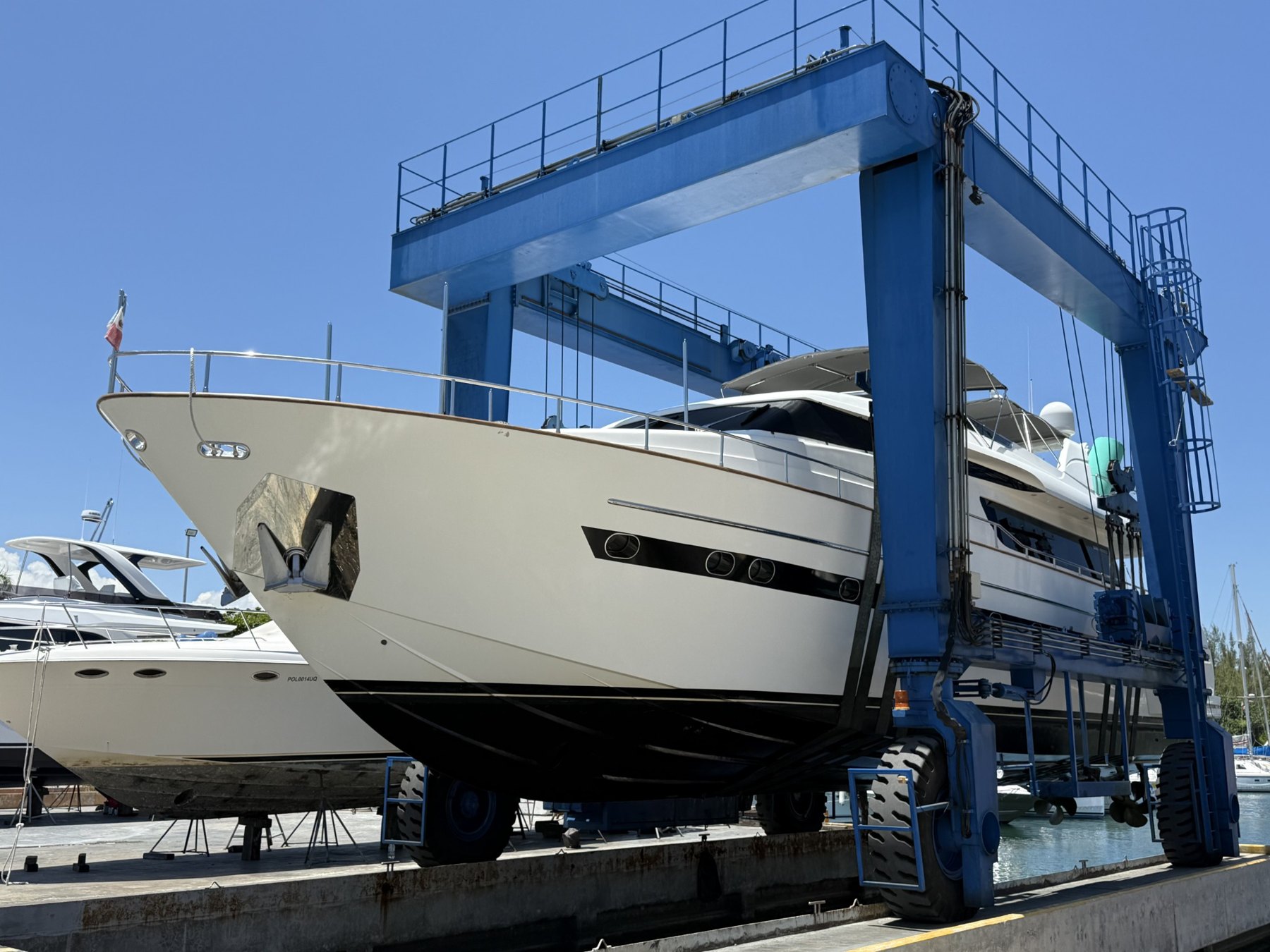
A yacht can look impeccable at the dock while important portions of its hull and running gear remain hidden beneath the waterline. An out-of-water inspection allows the surveyor to examine accessible submerged surfaces, fittings, appendages, and propulsion components. The hull must be safely supported and sufficiently clean; heavy marine growth can conceal defects. A haul-out is one component of a broader survey, not a guarantee that concealed structures are sound.
Antifouling coatings, blisters, and visible hull condition
The surveyor examines antifouling paint for excessive wear, flaking, bare areas, uneven buildup, and signs of poor adhesion. Coating appearance can help inform maintenance planning, but the remaining service life depends on the product, use, water conditions, and preparation. Blisters, cracks, repairs, and suspicious surface distortions deserve attention. A blister is not automatically evidence of structural delamination, and the underlying cause may require additional investigation.
Percussion sounding and moisture readings
A sounding hammer may be used on suitable accessible hull surfaces to listen for changes in response that could indicate an area warranting further investigation. Moisture meters can provide comparative indications when used appropriately. Neither tool, on its own, conclusively diagnoses delamination or establishes the condition of inaccessible laminate. Results must be interpreted in the context of construction, coatings, environmental conditions, and instrument limitations.
Propellers, shafts, struts, and rudders
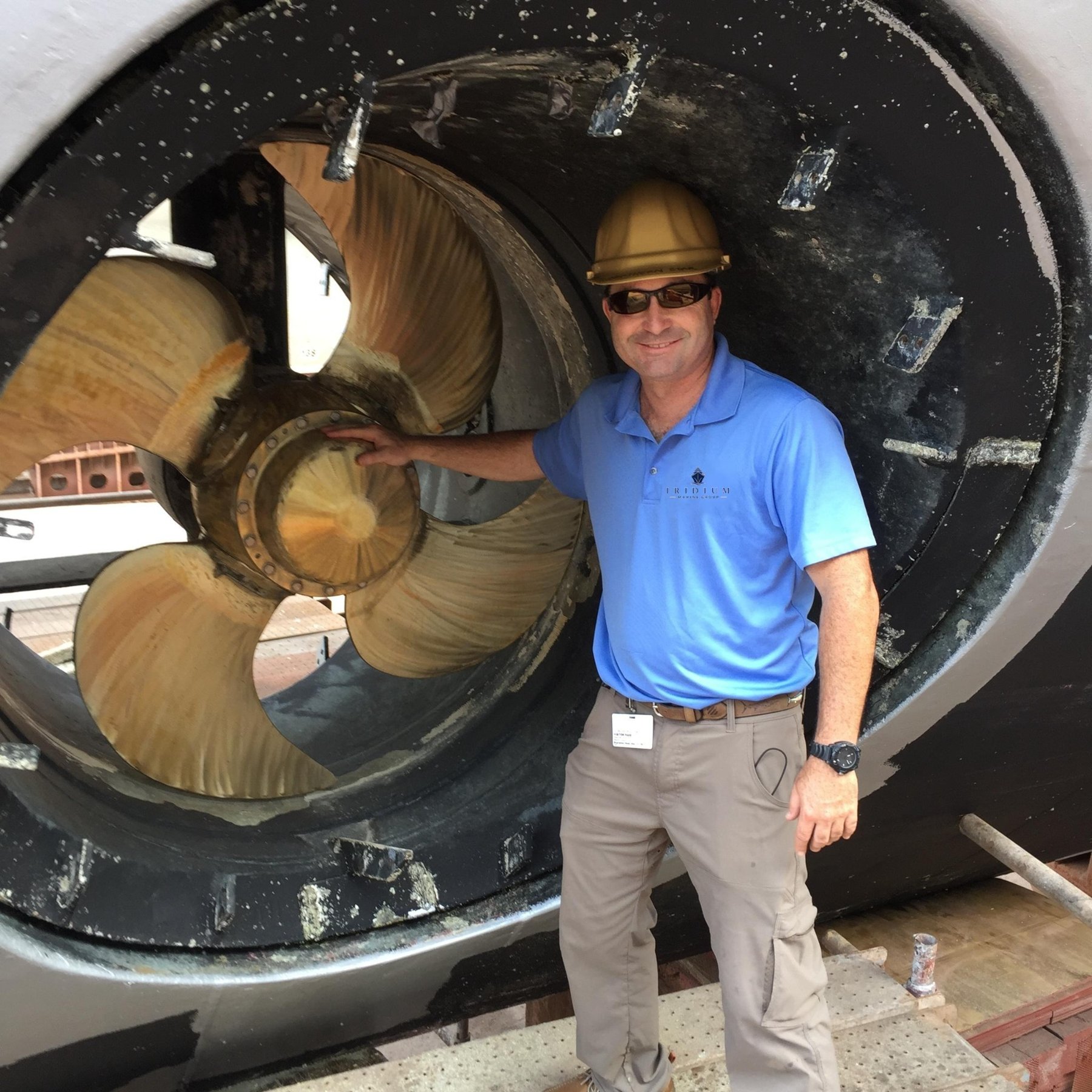
The surveyor looks for propeller-blade damage, visible corrosion, bent or damaged components, excessive apparent wear, loose or deteriorated fittings, and evidence of contact or repair. Accessible shafts, struts, bearings, rudders, and seals are examined as circumstances permit. Shaft alignment and internal bearing condition generally cannot be established by a visual inspection alone; specialist measurement or testing may be recommended.
Thrusters, stabilizers, and through-hulls
Bow and stern thruster tunnels, accessible thruster propellers, stabilizer fins, discharge openings, through-hull fittings, and nearby hull surfaces are examined for damage, deterioration, corrosion, or signs of leakage. Sacrificial anodes are checked for condition, attachment, and unusual consumption. Anode material and protection requirements depend on the vessel and its operating environment.
What the survey report should tell you
A useful report distinguishes observed conditions from possible causes, identifies limitations, and explains which findings warrant attention or specialist follow-up. The objective is not merely to produce a list of components: it is to help an owner or buyer understand visible condition, practical risks, and next steps.
Inspection scope and testing depend on the vessel, access, operating conditions, safety, and the agreed survey services. Observations described here are educational and do not replace an inspection of a specific vessel.